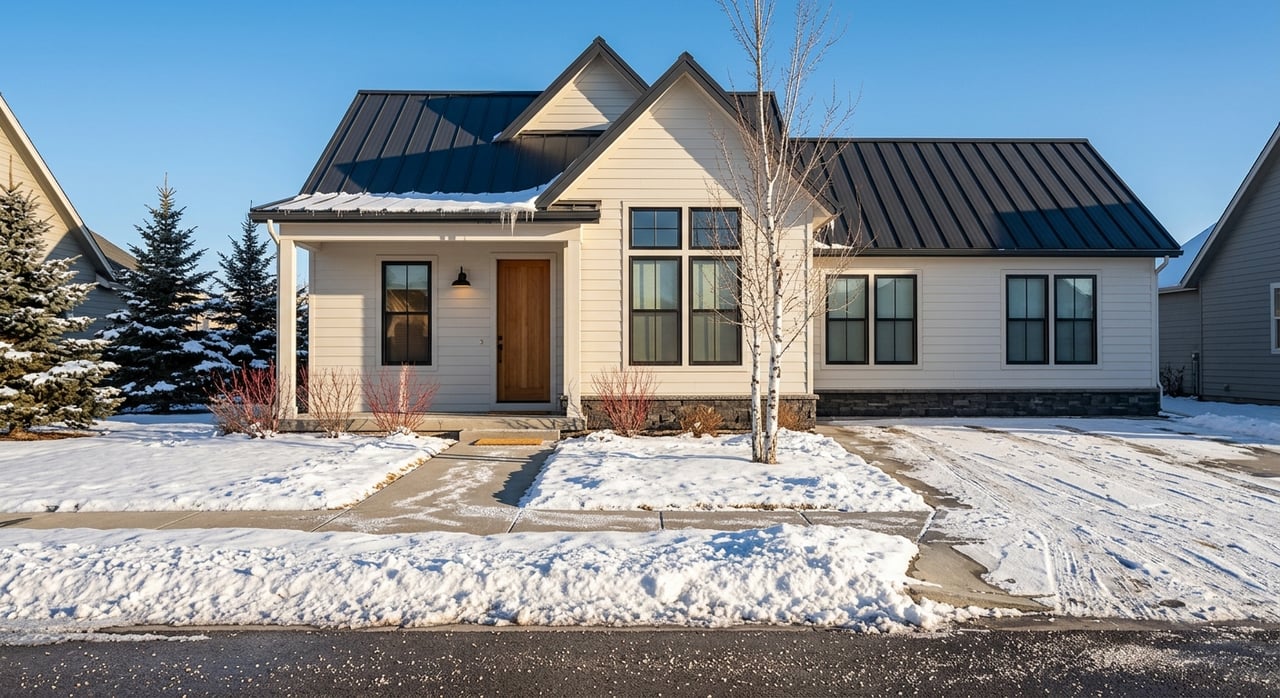
Wondering if low inventory means you can name your price in Anchorage? It is a tempting idea, especially when homes are still moving quickly in many parts of town. But in today’s market, the sellers who do best are usually the ones who price with precision, not just optimism. If you are thinking about selling, this guide will show you how to price your Anchorage home in a way that attracts serious buyers, protects your leverage, and helps you make the most of your launch. Let’s dive in.
Anchorage pricing still needs precision
Anchorage is still dealing with limited supply, but that does not mean every listing will spark a bidding war. Recent public market data points in the same direction: when a home is priced well, buyers respond. When it is priced too high, sellers often see slower activity or price reductions.
Redfin reports that Anchorage homes received 2 offers on average and sold in about 14 days over the three months ending April 2026. It also shows a 99.6% sale-to-list ratio and says 14.2% of homes had price drops. That is a strong reminder that buyers are willing to pay close to asking, but they are still watching value carefully.
Realtor.com gives a similar signal from a broader citywide view. As of April 2026, it reported 959 homes for sale, a median listing price of $474,900, a median sold price of $411,457, 27 median days on market, and a 100% sale-to-list ratio. Its inventory count was down 4.39% year over year, even with a month-over-month increase, which suggests supply is still limited over the longer view.
The takeaway is simple: Anchorage is supply-constrained, but the margin for pricing error is still narrow. Low inventory helps, but it does not erase the need for a smart list price.
Why overpricing can backfire fast
Many sellers assume that in a tight market, starting high gives them room to negotiate. In practice, that strategy can work against you. Buyers in Anchorage are still comparing your home to others on the market and to recent sales in the same area.
If your price misses the mark, the first signs usually show up quickly. Showings may be light, offers may not come in, and your home can lose momentum during the most important part of the listing period. That early window matters because Redfin says hot homes can go pending in around 4 days, while the average Anchorage home goes pending in around 10 days.
A slow first week or two often means buyers think the home is overpriced, not that they simply need more time. Once a listing sits, buyers may start to wonder what is wrong with it, even when the issue is only price. That can lead to reductions that weaken your negotiating position later.
Mortgage rates shape buyer behavior
Even in a low-inventory market, buyers are not making decisions based on price alone. They are also reacting to monthly payment. That matters a lot in a market where Freddie Mac reported the 30-year fixed mortgage rate at 6.48% on June 4, 2026.
In a mid-6% rate environment, small pricing changes can affect affordability more than many sellers realize. A home that feels only slightly overpriced on paper may push the monthly payment beyond what some buyers want to carry. That can shrink your buyer pool right away.
Pricing also affects search visibility. If your home lands just above a common search bracket, some buyers may never see it in their results. The right price is not just about value. It is also about staying visible and affordable to the largest realistic buyer pool.
Anchorage is not one market
One of the biggest pricing mistakes sellers make is relying too much on citywide averages. Anchorage is really a collection of micro-markets, and those markets can behave very differently. A pricing strategy that works in one area may not fit another.
Realtor.com’s neighborhood data shows just how wide the spread can be. Median listing prices range from $335,000 in Northeast Anchorage to $965,000 in Rabbit Creek. Other examples include Sand Lake at $499,000, Eagle River at $469,900, Turnagain at $480,000, South Anchorage at $600,000, and Abbott Loop at $419,900.
Days on market also vary by area. Bayshore-Klatt shows 16 median days on market, Sand Lake 20, Eagle River 22, and Rabbit Creek 37. That tells you demand is not uniform, even within the same municipality.
The same pattern shows up by ZIP code. Realtor.com reports a median listing price of $880,000 in 99516 compared with $329,000 in 99508. That gap is a good reminder that pricing your home based on broad Anchorage numbers alone can lead you off course.
What should shape your list price
A strong pricing strategy starts with recent closed sales in your immediate micro-market. That means looking at homes that truly compete with yours, not just any home in Anchorage with a similar bedroom count. The goal is to match what buyers are actually paying for homes like yours right now.
From there, your price should be adjusted for details that matter in your segment. These often include:
- Condition
- Lot size and usability
- View or setting
- Energy performance
- Home type, such as single-family, condo, or townhouse
- Updates, finishes, and overall presentation
This is where local knowledge becomes valuable. Two homes may look similar online but attract very different buyers once you factor in location, lot, layout, and condition. In Anchorage, those details can shift the right list price more than many sellers expect.
Why launch week matters most
The first 1 to 2 weeks on market are usually your best chance to create urgency. Buyers who have been watching for new inventory often move fast when a home looks well-positioned. If your home enters the market at the right price, you have the best chance of strong early traffic and serious offers.
If activity is weak right away, that is often a sign that buyers see a gap between price and value. In today’s Anchorage market, waiting too long to respond can cost you momentum. A listing that starts strong often keeps leverage, while a listing that stalls may need a reset.
This does not mean every home needs the same strategy. It means your launch price should be based on how buyers in your specific area and price range are behaving today, not on what the market felt like six months ago.
Pricing luxury homes needs a separate lens
If you are selling in Anchorage’s higher price ranges, citywide averages matter even less. Luxury buyers shop differently, compare different inventory, and often react to a narrower set of competing listings. That is why pricing a higher-end home requires luxury-specific comparables.
A local MLS-based market report found that the $1.3 million to $1.4 million price band sold fastest over the prior six months. That is useful local context, but it should not be treated as a rule for every high-end listing. The better lesson is that upper-bracket homes need to be calibrated against their own segment, not against Anchorage medians.
For luxury sellers, pricing and presentation work hand in hand. Premium marketing, polished visuals, and a pricing plan based on the right comparable homes can help you reach qualified buyers without overextending the list price.
A smart pricing mindset for Anchorage sellers
If you plan to sell in the next 3 to 12 months, it helps to think of pricing as a strategy, not a test. The strongest list price is the one that attracts the right buyers quickly and protects your net proceeds. It is not simply the highest number you hope someone might accept.
Anchorage data supports that approach. Homes are often selling close to asking, but not necessarily far above it. Redfin reports a 99.6% sale-to-list ratio, Realtor.com reports 100%, and a local MLS-based report shows 99.0%. Those numbers point to a market where buyers are active, but still disciplined.
That is why the best pricing plan is local, current, and specific to your home. When you combine recent comparable sales with a realistic view of condition, competition, and buyer payment sensitivity, you give your listing the best chance to stand out for the right reasons.
If you want a pricing strategy tailored to your Anchorage neighborhood, home type, and timing, Julie Erickson can help you look at the market through a local, data-driven lens and build a plan that fits your goals.
FAQs
How should you price a home in Anchorage’s low-inventory market?
- Start with recent closed sales in your immediate micro-market, then adjust for condition, lot, view, energy performance, and home type rather than relying on citywide averages.
Is Anchorage a seller’s market for home pricing?
- Public sources use different labels, but the safest takeaway is that Anchorage is supply-constrained and competitive enough that well-priced homes can move quickly, while overpriced homes can still sit.
How close to asking price are Anchorage homes selling for?
- Recent Anchorage data clusters very close to asking, with sale-to-list ratios reported around 99.0% to 100%, depending on the source.
Why does Anchorage home pricing vary by neighborhood?
- Neighborhoods and ZIP codes have different price bands, buyer pools, and days on market, so a pricing strategy that works in one part of Anchorage may not fit another.
What should you do if your Anchorage home has weak early showing activity?
- Weak activity in the first week or two usually points to a pricing or presentation issue, since current market data suggests buyers respond quickly when a home is positioned well.