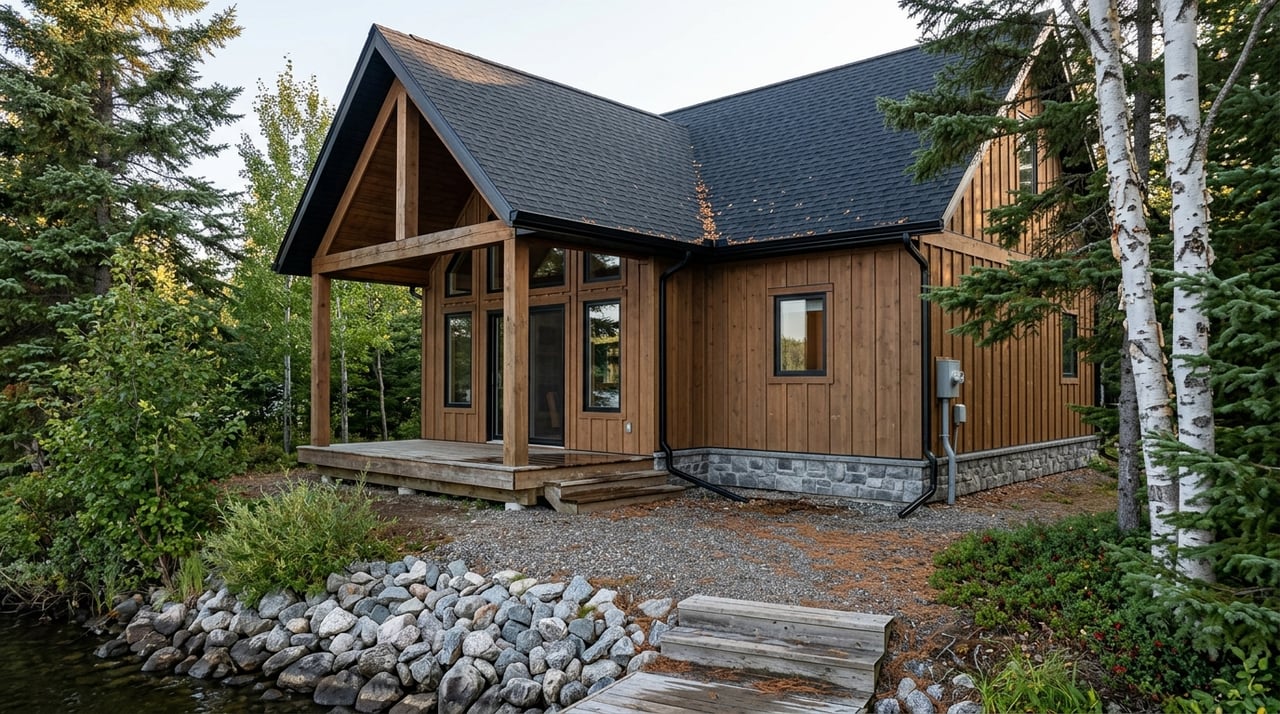
Dreaming about a place on the water near Wasilla? Lakefront property can offer beautiful views, easy access to recreation, and a strong sense of privacy, but it also comes with extra layers of due diligence. If you are thinking about buying a lakefront home, cabin, or vacant parcel in the Wasilla area, it helps to know what can affect access, utilities, shoreline use, and future building plans. Let’s dive in.
Why lakefront buying is different
A standard home search usually focuses on price, condition, and location. With lakefront property near Wasilla, you also need to understand who maintains the road, how water and septic work, whether the parcel sits near a regulated shoreline area, and what approvals may apply if you want to build or improve the site.
Those details can shape both your day-to-day use and your long-term costs. In many cases, the biggest surprises are not the home itself, but the logistics that come with access, winter conditions, and shoreline improvements.
Check city limits first
One of the first questions to ask is whether the property is inside Wasilla city limits or outside them. That matters because some borough permit rules apply outside the cities of Wasilla, Palmer, and Houston, but typically not inside those city limits.
For example, the Matanuska-Susitna Borough says properties outside those city limits may need a borough driveway permit if they connect to a borough road. Outside those same city limits, the borough’s Mandatory Land Use Permit can also apply when a structure is within 75 feet of a watercourse or waterbody.
Why this matters for buyers
If you plan to add a garage, cabin, boathouse, or other structure, the parcel location can directly affect your permit path. A home that looks simple on paper may involve a more detailed review if it sits outside city limits and close to the water.
This is one reason it is smart to confirm jurisdiction early, before you make assumptions about what you can build or change. It can save you time, money, and frustration later.
Understand road access and maintenance
Not every lake road near Wasilla is maintained the same way. In the Mat-Su Borough, roads may be borough-maintained, state-maintained, city-maintained, or unmaintained.
The borough maintains more than 1,100 miles of roads across 16 Road Service Areas, but buyers should never assume a lakefront road gets public plowing or grading. Snow removal timing also matters. The borough notes that when snowfall reaches 4 inches, clearing typically begins, and a 4-inch snowfall can take up to 48 hours to clear after the snow stops.
Questions to ask about access
Before you buy, ask:
- Is the road borough-maintained, state-maintained, private, or unmaintained?
- Is the property in a Road Service Area?
- Who handles plowing, grading, drainage, and repairs?
- Is there a private road agreement or shared maintenance arrangement?
If the driveway connects to a borough road, a driveway permit is required. If it connects to a private road, a borough driveway permit is not required. If it connects to a state-maintained road, a state permit may be needed.
Know how shoreline ownership works
A common mistake is assuming lakefront ownership automatically includes complete control over the shoreline and the water edge. In Alaska, the state says it owns most shorelands and submerged lands on navigable waters.
Shorelands include the land covered by navigable, nontidal water up to the ordinary high-water mark. Public access easements and navigable waterways also may not be obstructed, which is important if you are thinking about docks, floats, or other waterfront features.
What this means in practice
You may own the upland parcel, but some shoreline and submerged land issues can still involve state rules. That does not mean every personal-use feature is prohibited. It means you should confirm what is allowed before assuming you can install or expand structures near the water.
For many buyers, this becomes especially important when comparing a turnkey lake home to vacant land where future improvements are part of the plan.
Ask detailed questions about docks and shoreline work
If a private dock is part of your lakefront dream, do not leave that question for later. Alaska DNR says a personal, noncommercial dock, float, boathouse, or mooring buoy placed within the projected sidelines of the upland parcel and without interfering with public access does not typically require a DNR permit.
Even so, that is not always the end of the review. The Mat-Su dock guide says Corps review may still be needed if fill is placed below the ordinary high-water mark or on wetlands. The guide also specifically flags Big Lake and Flat Horn Lake for Corps permits on structures.
Smart dock questions
Ask these before you buy:
- Is there an existing dock, float, boathouse, or buoy?
- Was it installed with any required approvals?
- Do you plan to place fill, change the shoreline, or build on wetlands?
- Is the lake one with added scrutiny for structures?
These details can affect both your budget and your timeline for using the property the way you want.
Review water and well information carefully
Many lakefront properties near Wasilla rely on private wells. Alaska DEC says private well owners are responsible for sampling and testing their own water, and the state does not sample, test, or regulate private well water quality.
DEC recommends at least annual nitrate and coliform testing. That makes recent water test results an important part of your due diligence.
What to request from the seller
If the property has a private well, ask for:
- Recent water test results
- The well log
- Any records of repairs or service
- Information on seasonal performance or freeze protection
DEC also notes that missing well-log recording can create difficulties in future real estate transactions. If the file is incomplete, that is worth understanding before you move forward.
Verify septic design and condition
Septic systems are another major part of lakefront buying. DEC says a registered Alaska professional engineer evaluates the soils, performs a percolation test if needed, designs the septic system, and certifies the completed installation.
An engineer is also required when minimum setbacks or separation distances cannot be met. That matters on waterfront lots, where site constraints can be tighter than buyers expect.
Why septic deserves extra attention
A lakefront lot may have limited space for replacement or expansion. If you hope to add bedrooms, enlarge the home, or rebuild in the future, the existing septic design and site conditions can affect your options.
Ask what type of system is installed, whether records are available, and whether the system was designed under Alaska DEC rules. That gives you a clearer picture of both current function and future flexibility.
Plan for seasonal and winter use
Some Wasilla-area waterfront properties are full-time homes. Others are seasonal cabins. The difference matters, especially in Alaska.
The University of Alaska Fairbanks notes that dry cabins may be used year-round or seasonally and often do not have well and septic systems. They may rely on delivered water tanks or other nonstandard setups. UAF also warns that severe cold can lead to utility freeze-up problems.
Winter questions worth asking
Before you buy a cabin or seasonal-use property, ask:
- How is the home heated?
- Is there a winterization plan?
- How are pipes, tanks, or utility lines protected?
- Is there backup heat or power?
- How is the property managed during vacancy?
These answers can tell you a lot about real operating costs and whether the property fits how you plan to use it.
Watch for floodplain and shoreline permit triggers
A beautiful waterfront setting can come with added review if the parcel is in a designated flood hazard area. The borough requires a Floodplain Development Permit before work begins in those areas.
According to the borough, this can apply to structures, excavation, grading, filling, shoreline alteration, utility installation, and road or bridge construction. The borough defines a flood hazard area as a FEMA Special Flood Hazard Area with a 1 percent annual chance of flooding.
Another key permit rule
Outside the cities of Palmer, Wasilla, and Houston, the borough’s Mandatory Land Use Permit applies to structures within 75 feet of a watercourse or waterbody. The required site plan must show nearby waterbodies, septic systems, wells, driveway locations, easements, setbacks, and intended use of structures.
If you are buying vacant land or a property with renovation plans, this is one of the most important items to check early.
Construction timing can be seasonal
In the Mat-Su area, timing matters more than many buyers expect. Seasonal road closures and weight restrictions can affect hauling, utility trenching, and construction work.
The borough says winter closures can restrict normal construction within 10 feet of road edges, and open-cut work may have to stop until spring. Case-by-case exceptions may be approved for utility connections needed so homes can be occupied before spring.
Why this affects your purchase plan
If you are buying raw land or a fixer with a short improvement timeline, seasonal restrictions can change your budget and move-in schedule. It is wise to match your purchase timeline with realistic construction and access windows.
This is especially true if utility work will occur in the public right-of-way, because the borough requires a Utility Permit for water, sewer, gas, electric, or telecom work there.
Look for lake-specific rules and local plans
Some rules are not universal across every lake. The borough says lake management plans can guide surface use and public access, and parts of a plan can become enforceable through Title 17.59.
The borough also regulates certain winter ice houses on a short list of lakes, including Big Lake, Diamond Lake, Lake Five, Little Question Lake, and Little Lonely Lake, plus two unnamed lakes near Question Lake and Talkeetna Spur Road. Registered ice houses must be 75 feet from the high water mark, 30 feet apart, and removed before breakup.
Why local detail matters
Even if an issue does not affect you today, it could affect how you use the property later. Shared access, public-use patterns, winter recreation rules, and lake management plans can all shape the ownership experience.
That is why broad lakefront appeal should always be paired with very property-specific research.
Best questions before making an offer
If you want to cut through the noise, focus on the questions that most often affect cost and usability:
- Is the parcel inside Wasilla city limits or outside them?
- Which permits apply now, and which could apply to future improvements?
- What kind of road access does the property have?
- Who maintains the road in winter and summer?
- Is the lot within 75 feet of the water?
- Is the parcel in a flood hazard area?
- Is there a private well, and can you review the well log and recent tests?
- What septic system serves the property, and are records available?
- If the home is seasonal, how is it winterized and maintained?
- Are there any covenants, road agreements, HOA rules, or lake-management rules affecting access or shoreline use?
These questions help you understand not just the property’s beauty, but its real-world function.
A smart lakefront purchase starts with local guidance
Buying lakefront property near Wasilla can be exciting, but it pays to slow down and ask the right questions. Access, utilities, shoreline rules, and seasonal use can all affect whether a property feels easy and enjoyable or unexpectedly complicated.
When you understand those details before making an offer, you can buy with more confidence and fewer surprises. If you are exploring waterfront homes, cabins, or land in the Wasilla area, Julie Erickson can help you evaluate the practical side of lakefront living and find a property that truly fits your goals.
FAQs
What should you check first when buying lakefront property near Wasilla?
- Start by confirming whether the parcel is inside Wasilla city limits or outside them, because that affects which borough permit rules may apply.
Do lakefront properties near Wasilla always have public road maintenance?
- No. Roads may be borough-maintained, state-maintained, city-maintained, private, or unmaintained, so you should verify plowing, grading, and repair responsibility before you buy.
Do you need approval for a dock on a Wasilla-area lake?
- Not always, but you should verify the details. A personal, noncommercial dock may not typically require a DNR permit if it stays within the upland parcel sidelines and does not interfere with public access, but other review may still apply in some situations.
What water tests matter for a private well on lakefront property?
- Alaska DEC recommends at least annual nitrate and coliform testing, so ask for recent test results and the well log during your due diligence.
Why is septic review important for Wasilla lakefront homes?
- Waterfront lots can have tighter site constraints, and Alaska DEC rules require septic design and certification by a registered Alaska professional engineer.
Can floodplain rules affect lakefront property near Wasilla?
- Yes. If the parcel is in a designated flood hazard area, the borough requires a Floodplain Development Permit before certain work begins.
Are seasonal cabins near Wasilla different from year-round homes?
- Yes. Some seasonal or dry cabins may lack standard well and septic systems and may need extra planning for heating, water supply, and freeze protection in cold weather.